Why Reviews Are the Weakest Signal
For a B2B supplier, review scores are easy to inflate and hard to verify. There is no way to confirm that a reviewer ever placed an order, and a supplier can simply start a new domain if a reputation becomes a problem. Treat reviews as a starting point for questions, not as evidence of anything.
What you can verify is the legal and financial footprint of the business, and whether its paperwork is internally consistent. Those checks are harder to fake at scale.
1. Company Registration
- Ask for the full registered company name, the registration number and the registered address. Not a trading name, not a brand name — the legal entity.
- Look the entity up in the relevant national company register. Within the EU this is usually free. Check that the company is active rather than in liquidation or struck off.
- Compare the registered address with the warehouse address and the bank account country. A supplier whose legal entity, warehouse and bank account are in three unrelated jurisdictions is worth questioning, not automatically rejecting.
- Check the registration date. A company incorporated a few months ago is not necessarily dishonest, but it does mean there is no trading history to assess.
2. VAT and Customs Identification
- For intra-EU trade, ask for a VAT number and validate it through the European Commission's VIES service. The check is free and instant, and it confirms the number is live and tied to the stated company name and country.
- For an EU-based business that imports, ask for the EORI number and validate it in the Commission's EORI database. A supplier that regularly imports has one; a supplier that only resells locally may not need one.
- Be precise about what these prove. A valid VAT number confirms the entity is registered for VAT — it does not confirm product compliance, stock levels or that the business is a good trading partner.
3. Product Documentation
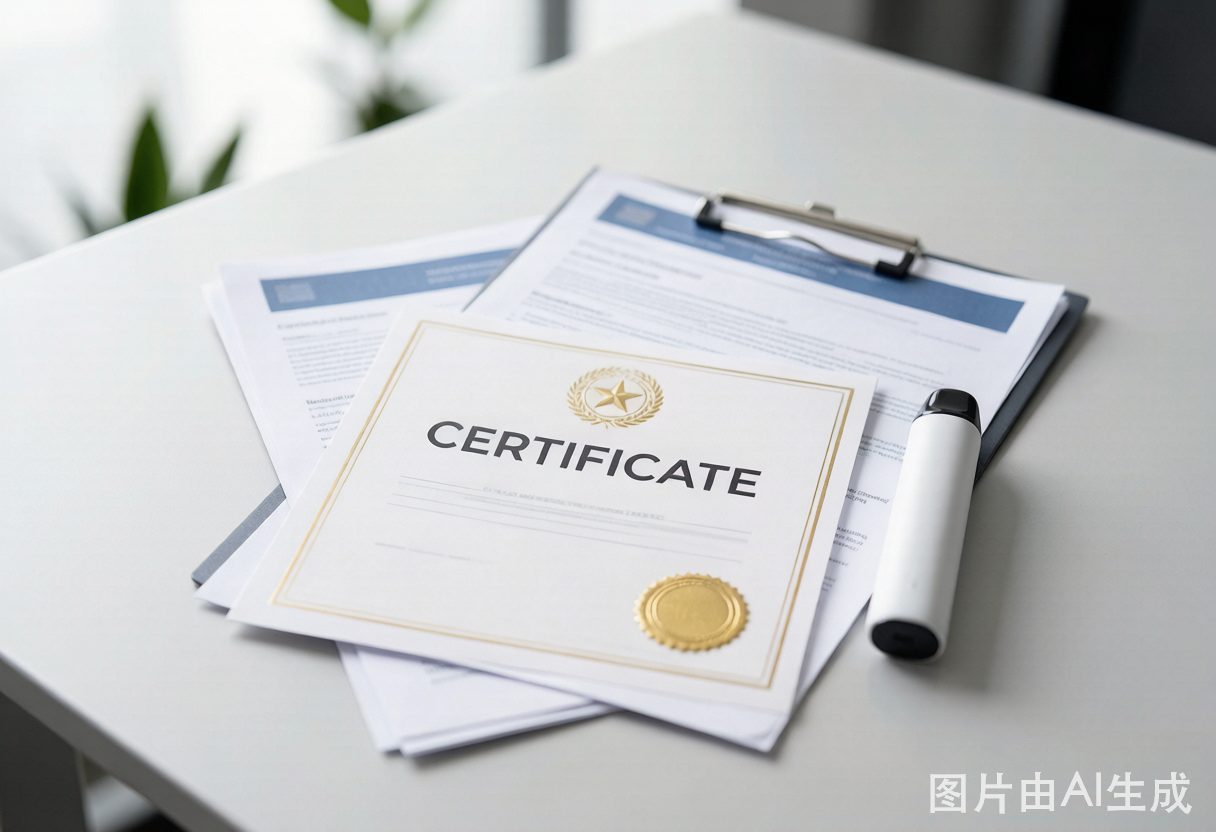
- Does the document name the exact model? Test reports and certificates are frequently issued for one SKU and attached to another. Ask which model the document covers and check it against your order.
- Is the issuing body identifiable? A legitimate test report names the laboratory. An unidentifiable logo is not a certificate.
- Is the date current? Standards change. A five-year-old report may not reflect the current version of a standard.
- Which legal category does the product fall into? Sealed single-use, rechargeable, or rechargeable and refillable. This determines market access in several European countries and is the single most useful product question a B2B buyer can ask.
4. Stock and Fulfilment Reality
- Ask directly which warehouse a given model ships from, and how many units are currently in stock.
- Ask what happens if the quantity you order exceeds available stock. A supplier that answers clearly understands their own inventory; a vague answer often means drop-shipping from a third party.
- Ask for the realistic lead time for a repeat order, and compare it with the first order. If the first order took 10 days and they promise 3 days for the next, ask where the stock is held.
- Request a photo or short clip of the actual stock, with packaging, if the value of the order justifies it.
5. Quotation Quality
A trustworthy quote is specific. Vague quotes are the place where disputes later start. A useful quote states:
- Unit price, and whether it is per piece or per box, and the currency.
- MOQ, and whether it is per model or per mixed order.
- The incoterm: EXW, FOB, DAP or DDP — and who is the importer of record.
- Lead time from payment to dispatch, and the shipping method.
- Which documents accompany the shipment.
- What happens on short delivery, wrong item, or a defect rate above an agreed threshold.
6. Payment Red Flags
- Account name mismatch. If the invoice says one company and the bank account is in a different name — particularly a personal account — stop and ask why in writing.
- Full payment upfront on a first order. A deposit and balance arrangement shares risk. A demand for everything in advance places it entirely on you.
- Pressure on method. Insistence on a channel with no recovery route, especially where you are told the transparent option is not available for your country, deserves scrutiny.
- Prices far below the market. Either the specification is different, the stock is not real, or the compliance position is unclear. Ask which.
7. Questions That Reveal a Lot
Ask something the supplier can only answer if they genuinely know their own business and market:
- "Which legal category is this device in for Germany, and why?"
- "What is the EAN or SKU code for this model?"
- "If I order 10 boxes and you only have 6 in stock, what do you do?"
- "Can you tell me the date on the test report for this model?"
- "Who is the declared importer of record on a DDP shipment to my address?"
An experienced supplier answers these without hesitation. A broker has to go and ask someone else.
8. Put the Terms in Writing
Before payment, confirm by email: the model and specification, quantity, unit price and currency, MOQ terms, incoterm and importer, lead time, packaging and labelling language, documents provided, and the process for short or defective delivery. A supplier who resists documenting this is telling you what a problem will look like later.
How to Assess Any Supplier, Including Us
We are a factory-backed supplier holding stock in Germany, Poland and Spain. If you want to run these checks, ask us for our registered company details, VAT and EORI information, warehouse locations, and the test documentation for the specific models you are considering. We would rather answer those questions before an order than after one.
See our EU warehouse setup for coverage and lead times, and the China supplier verification guide if you are also evaluating direct sourcing.
Frequently Asked Questions
How can I tell if a vape wholesaler is legitimate?
Verify the legal entity in a national company register, validate the VAT number through the European Commission's VIES service, and check the EORI number if the business imports. Then check that product documents name the exact model you are ordering and are current. Reviews and testimonials are the weakest signal because they cannot be independently verified.
Are Trustpilot reviews reliable for vape wholesalers?
Treat them as a starting point rather than proof. There is no way to confirm that a reviewer placed a real order, and scores can be inflated or reset by starting a new domain. Public registers, product documents and the quality of a written quotation are more reliable indicators.
What should be included in a wholesale quotation?
Unit price and currency, whether pricing is per piece or per box, MOQ terms, the incoterm and who is the importer of record, lead time from payment to dispatch, shipping method, documents supplied with the shipment, and the process for short or defective delivery.
What are the warning signs of a fraudulent vape supplier?
A bank account name that does not match the invoiced company, particularly a personal account. A demand for full payment upfront on a first order. Pressure toward a payment method with no recovery route. And prices far below the market, which usually mean a different specification, non-existent stock, or an unclear compliance position.
Do I need to check a VAT number for a supplier outside the EU?
A non-EU supplier will not have an EU VAT number. In that case verify the business licence and registered scope in the supplier's own jurisdiction, confirm the identity of the bank account holder against the invoiced company, and ensure the incoterm and importer of record are stated clearly in writing before you pay.
Want to Run These Checks on Us?
Request our company details, warehouse locations and product documentation. We will send them before you commit to anything.