The Two Rules That Decide Everything
Before looking at country tables, two definitions determine whether a product can legally be placed on a market.
1. Single-use vs rechargeable and refillable
Most bans target single-use vapes, and that term is narrower than the everyday word "disposable". Under the UK's single-use vape regulations and the logic behind coming EU rules, a device counts as single-use if it can be neither recharged nor refilled. A device that is rechargeable but sealed shut is still single-use; a device that is refillable but has a non-rechargeable battery is also single-use. To fall outside the banned category, a product generally needs to be both rechargeable and refillable, or use a separately available replaceable pod.
All HIFANCY models we stock are rechargeable via Type-C, which is a different legal category from a sealed single-use device.
2. The TPD baseline still applies everywhere
Whichever national rules apply, the Tobacco Products Directive sets the floor across the EU: a maximum nicotine concentration of 20 mg/ml, a 2 ml cap on cartridge and tank capacity, a 10 ml cap on refill bottles, mandatory health warnings and product notification before placing on the market. A 30,000 or 70,000-puff device with a large prefilled reservoir sits outside the 2 ml threshold, so it cannot be treated as an ordinary TPD-notified product. Buyers should confirm the applicable route for their specific SKU and market.
Country-by-Country Status
Status as of September 2026. National positions move quickly and several measures are still in their legislative process.
| Country | Status (Sept 2026) | Key date |
|---|---|---|
| Belgium | Full ban in force | 1 Jan 2025 |
| United Kingdom | Full ban in force | 1 Jun 2025 |
| France | Full ban in force | 25 Feb 2025 |
| Ireland | Approved, not yet in force | Expected Jan 2027 |
| Austria | Approved by EC | Pending |
| Bulgaria | Approved by EC | Pending |
| Poland | Legislative process | Draft approved 10 Mar 2026 |
| Germany | No ban in force | Under discussion |
| Spain | No ban in force | Bill submitted, vote expected late 2026 |
| Netherlands | Flavour restriction only | Tobacco flavour only since 1 Jan 2024 |
| Denmark | Flavour restriction only | Tobacco & menthol only |
| Italy | No ban in force | TPD baseline applies |
The Deadline That Applies to Everyone: 18 February 2027
Regulation (EU) 2023/1542 on batteries is not vape-specific legislation. Article 11 requires that portable batteries built into products be readily removable and replaceable by the end user, and it applies from 18 February 2027.
"Readily removable" is defined precisely: the battery must come out using commercially available tools, without proprietary tools, heat or solvents. Designs held together by adhesive or ultrasonic welding — which describes most sealed single-use vapes and many pod systems — do not meet that test. The European Commission's guidance names electronic cigarettes as a category of concern because of fire risk from small lithium batteries in waste facilities.
The practical consequence: even in markets with no national disposable ban, such as Italy and Poland today, sealed-battery single-use formats face a hard EU-wide constraint from that date. Rechargeable products with an externally accessible charging port are not affected in the same way, but the replaceable-battery requirement is broader than charging.
What This Means for Buyers in Practice
- Check the product definition, not just the country. A market with a ban may still allow rechargeable devices, and a market with no ban may still exclude sealed single-use formats after February 2027.
- Watch the retail channel, not only the product. Spain is restructuring vape sales toward licensed tobacconists, which changes who can legally place replenishment orders even before any product ban takes effect.
- Flavour rules bite faster than bans in some markets. The Netherlands permits sales but restricts retail to tobacco flavour, and Denmark to tobacco and menthol. A legally importable device can still be unsellable if its flavour range is non-compliant.
- Plan sell-through against the February 2027 date. Slow-moving sealed-battery stock bought today carries a defined shelf life in regulatory terms.
Where Stock Can Still Move Today
Poland and Italy have no disposable ban in force. Germany has no ban in force and disposables remain legal while legislation is debated. Spain still permits sales while its reform works through parliament. These are the markets where EU-warehouse stock can be placed now — with the caveats above applied SKU by SKU.
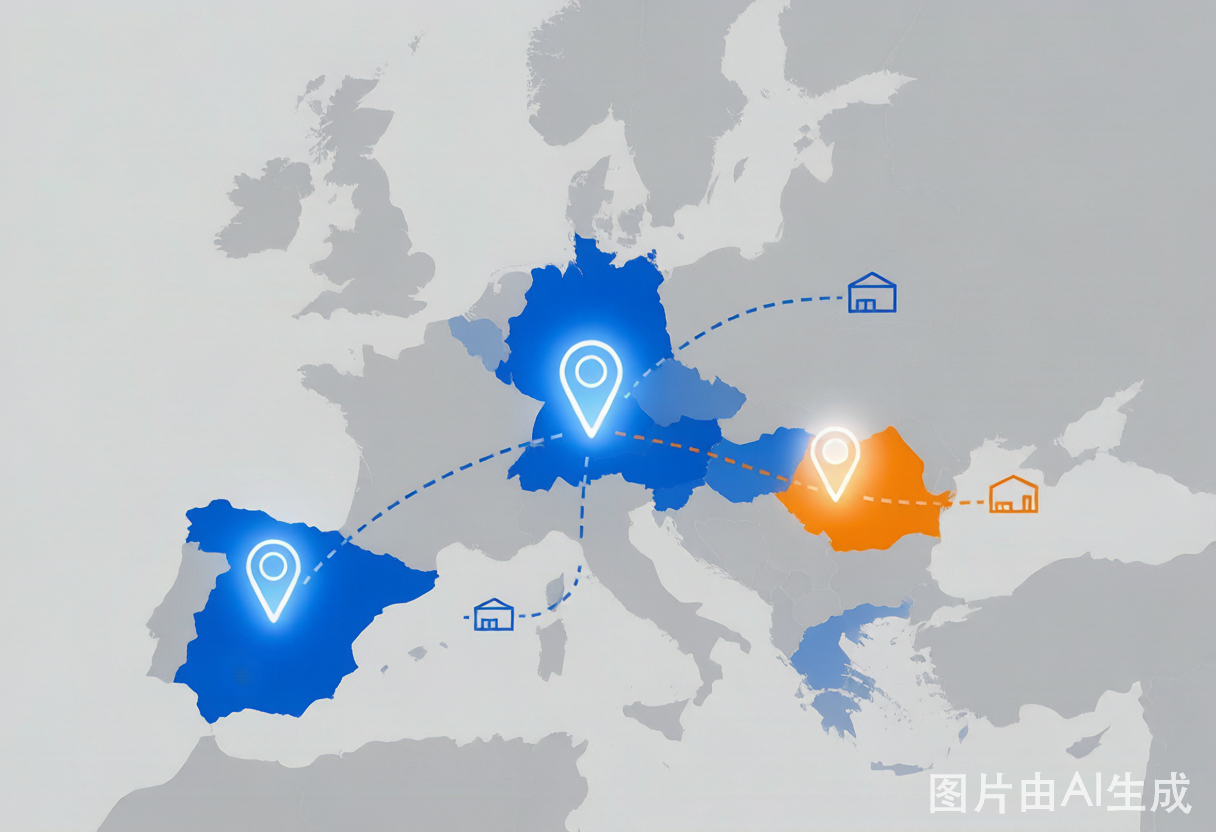
We hold stock in Germany, Poland and Spain warehouses so that orders can be fulfilled in 2-4 days rather than waiting on a cross-border clearance cycle that may itself become a compliance risk. See our EU warehouse setup for coverage and lead times.
How to Verify for Your Own Market
- Check the European Commission's TPD notification list for whether the specific product is notified.
- Check EUR-Lex for the consolidated text of Regulation (EU) 2023/1542, Article 11 and Article 96.
- Check your national health ministry's tobacco control page for the current stage of any pending bill — "approved by parliament" and "in force" are different things.
- Ask your supplier to state in writing which category a product falls into: sealed single-use, rechargeable, or rechargeable and refillable.
Frequently Asked Questions
Which countries have banned disposable vapes in Europe?
As of September 2026, Belgium (1 January 2025), the United Kingdom (1 June 2025) and France (25 February 2025) have full bans in force. Ireland, Austria and Bulgaria have had measures approved but not yet in force. Poland's draft was approved by the Council of Ministers on 10 March 2026 and is still in the legislative process.
Is Germany going to ban disposable vapes?
No ban is in force in Germany as of September 2026, and all vape formats remain legal to sell. The Bundesrat has called for a national sales ban and the expected mechanism is an amendment to the Electrical and Electronic Equipment Act targeting devices with non-removable batteries. Separately, since 1 July 2026 German retailers must accept used disposable vapes back free of charge at the point of sale.
What is the EU Battery Regulation deadline for vapes?
Article 11 of Regulation (EU) 2023/1542 requires portable batteries in products to be readily removable and replaceable by the end user, and applies from 18 February 2027. It applies across all EU member states, including markets with no national disposable ban. Replacement batteries must generally remain available for at least five years after the last unit is placed on the market.
Does a disposable vape ban also ban rechargeable devices?
Generally no. Most national bans target single-use devices, meaning those that can be neither recharged nor refilled. A rechargeable device, or a rechargeable and refillable device, sits outside that category — although it must still meet TPD rules and any national flavour or channel restrictions.
Can I still buy wholesale disposable vapes for Spain?
Disposable vapes remain legal to sell in Spain as of September 2026, but the retail channel is being restructured. Phase one, from April to December 2026, allows existing non-tobacco retailers to clear stock but not to place new replenishment orders; phase two, from 1 January 2027, restricts offline and registered online vape sales to licensed tobacconists. Non-licensed Spanish buyers should verify their status before ordering.
Need a Compliant Supply Plan?
Tell us your target markets and we will confirm current stock availability and documentation before you order.